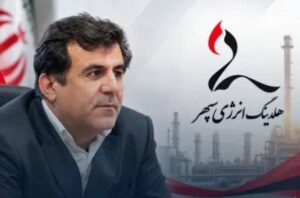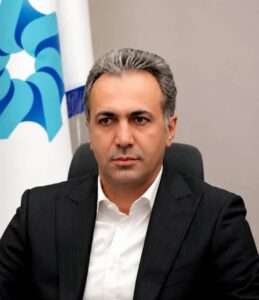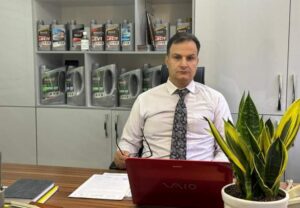
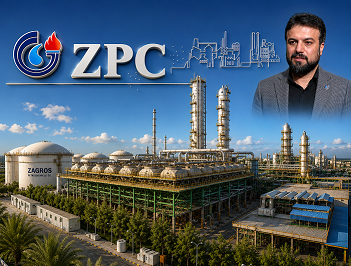
Dr. Matin Didari, CEO of Zagros Petrochemical Company, said in an interview with “Rahbord Energy” on the sidelines of the company’s 2025-2026 fiscal-year general assembly, regarding the impact of the two wars, the issue of securing a stable feedstock supply, production stoppages, and increased production costs on the company’s profitability: “We achieved approximately a 30 percent increase in production, with production volume rising from 1.7 million tons to 2.2 million tons, and the company’s operating revenue increasing from 23 trillion tomans to 45 trillion tomans”. These were positive developments, but since the price of gas feedstock and energy carriers was very high, it had an adverse impact on the company’s net profit.
Didari added: “We are pursuing the process of increasing the company’s registered capital tenfold, from 2.4 trillion rials to 24 trillion rials. This has been approved by the company’s board of directors, endorsed by the company’s auditor, and we will continue following up on the matter with the Securities and Exchange Organization so that we can achieve positive outcomes for Zagros Petrochemical.
Regarding the company’s performance in spring of 2026, the CEO of Zagros Petrochemical said: “As for our performance in spring of 2026, despite the wartime conditions and the inability to produce at nominal capacity, we recorded a satisfactory performance, achieving more than 2 trillion tomans in profit for Zagros during the spring of 2026.
Regarding the turmoil and concerns over supply restrictions in the Middle East and disruption in the Strait of Hormuz, which have caused the price of methanol delivered at the end of July to trend upward toward $450 per ton CFR Southeast Asia, while downstream methanol consumers—particularly acetic acid producers—have begun purchasing and stockpiling methanol and on the other hand, we are witnessing discounts of $10 to $14 per ton on Middle Eastern methanol cargoes, excluding Iran. What is Zagros Petrochemical’s strategy for methanol exports and market presence? He stated: “Given the prevailing conditions, since the sales term is CFR, there is a problem: logistical presence. Buyers cannot take the risk of positioning their logistics in the region and purchasing on an FOB basis. This has had a significant impact, itself causing an increase in cargo freight rates during the recent war. Regarding the increase in methanol prices, there has been some upward movement, but customers purchase Iranian methanol cautiously.”
The CEO of Zagros Petrochemical further emphasized: “We had no problems in sales during the war and were able to sell at the highest rates and at suitable prices by using our own logistics capacity, the effect of which we saw in this year’s first-quarter report. Of course, we are pursuing improved sales by diversifying markets at more favorable prices in order to achieve greater profitability. This, however, depends on stable production so that we can subsequently make more sales. We are cooperating and creating synergies with other Iranian methanol producers in sales and transportation so that we can collectively move forward with a unified approach.
Didari, regarding whether the company’s development projects, including the ASU project, are under construction or have been halted given the region’s critical circumstances, said: “Our development projects, including the ASU unit, are underway. Currently, one of its pieces of equipment is being transported from the contractor company’s factory, HATCO, to the company’s complex in Assaluyeh. Some other equipment has already been transported, while some additional equipment is still being manufactured. The ASU project has not been halted.”