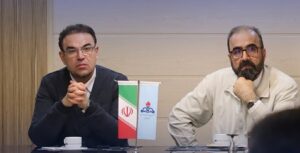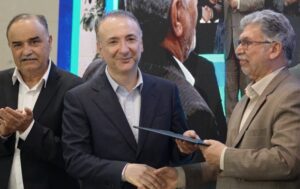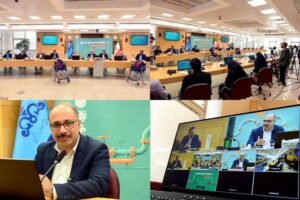
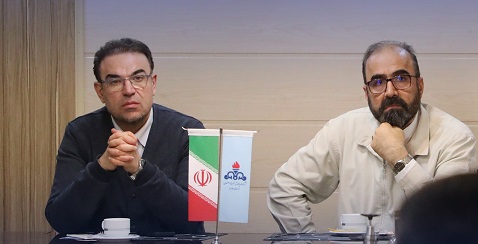
A joint meeting was held with the presence of Gholamreza Bagheri Dizaj, CEO of Esfahan Oil Refining Company (EORC), Ebrahim Sheikh, Deputy Minister of Industry, Mine, and Trade, senior managers of the Ministry of Industry, Mine, and Trade, directors of the provincial Industry, Mine, and Trade Department, and a group of senior managers of Esfahan Oil Refining Company.
This meeting was held at the premises of EORC with the aim of streamlining the currency allocation process, removing currency barriers and problems of the company, supporting the continuation of sustainable production, and facilitating the implementation of development and quality improvement projects.
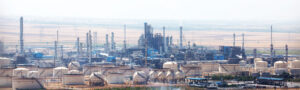
At the beginning of this meeting, Gholamreza Bagheri Dizaj, by introducing the capacities, capabilities, and strategic position of EORC, stated: This company, as one of the largest and most important refineries in the country, has a significant share in supplying petroleum products including gasoline, diesel, aviation fuel, and other strategic products and plays a fundamental role in energy security and the sustainability of the country’s fuel supply cycle.
Emphasizing the importance of continuous production alongside the implementation of development projects, he added: Timely supply of equipment, parts, and raw materials required through rapid and targeted currency allocation is essential to maintain production stability and advance major plans for product quality improvement and pollution reduction. Any delay in currency processes can, in addition to causing interruptions in development projects, also challenge the continuity of production.
The CEO of EORC emphasized the necessity of constructive and continuous interaction between this company and the Ministry of Industry, Mine and Trade, and called for facilitation, transparency, and acceleration in processes related to the provision and allocation of foreign currency.
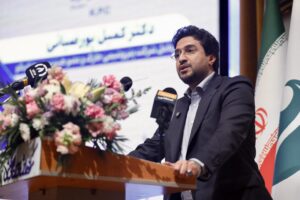
Subsequently, Ebrahim Sheikh, Deputy Minister of Industry, Mine and Trade, referring to the vital role of refining industries in the national economy, considered supporting strategic production units as one of the ministry’s priorities and stated: The Ministry of Industry, Mine and Trade is ready, in cooperation with relevant agencies, to manage the foreign currency allocation processes in a way that the foreign currency needs of large and influential companies in the country are met more quickly and accurately.
Senior managers of EORC also expressed their views, issues, and specialized suggestions in the foreign currency field and emphasized the necessity of establishing joint mechanisms for continuous follow-up on these matters.
In conclusion, it was decided that by forming a joint specialized working group, the company’s foreign currency issues would be regularly reviewed and followed up to facilitate the acceleration of foreign currency supply, support the continuity of production, and advance the developmental projects of this strategic entity more than ever before.
A visit to ongoing refinery projects, including RHU and RFCC, was another part of this meeting’s agenda.