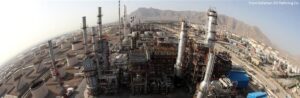
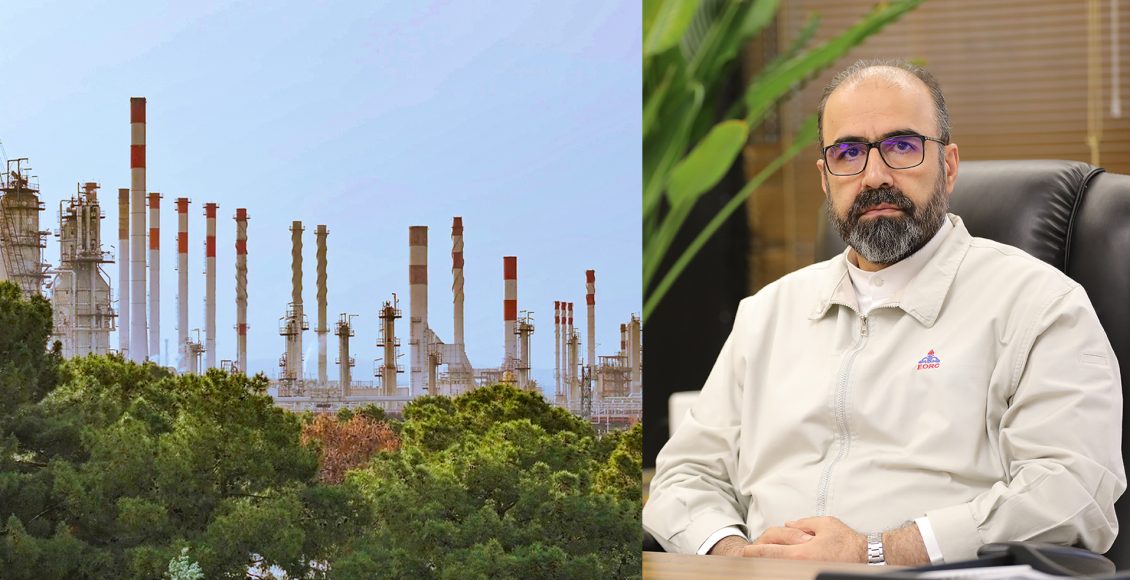
Results from the report by the Department of Environment and the University of Tehran in the project “Preparation of a List of Air Pollutant Emissions in Metropolitan Cities” show that the share of Esfahan Refinery in the four main components of air pollution, including CO, NOx, SOx, and suspended particulate matter (PM), is very minimal, and this entity plays a minimal role in the air pollution of the metropolis of Esfahan. According to this report, the share of Esfahan Refinery was only 0.18% in CO emissions, about 5% in NOx, 0.8% in SOx, and zero percent in suspended particulate matter (PM). Nevertheless, Esfahan Oil Refining Company(EORC) has always been a pioneer in implementing environmental projects and reducing pollutants, and over the years, it has paid special attention to environmental preservation through multi-billion projects. This trend has no end point for Esfahan Refinery, and currently, massive projects are underway with a dominant environmental approach. The company is undertaking projects to manage air refining, which are presented in an interview with the CEO of Esfahan Oil Refining Company.
Implementation of the FGR Project with the Aim of Complete Elimination of Flare Gases
Gholamreza Bagheri Dizaj, explaining the company’s environmental actions, said: “One of the most important refinery projects in this area is flare gases recovery (FGR), which is being implemented with a budget of over 6.8 million euros and 520 billion rials. This project has so far achieved 85% physical progress and will be operational by the end of 2025. With the launch of this plan, the refinery will be exempt from the provisions of Note 4, Article 4 of the executive regulations of the government decree concerning Article 27 of the Value Added Tax Law.”
The Major Sulfur Management Project; A Green and Forward-Looking Approach
He continued: “In another plan, the company began studies for the construction of a sulfur management unit in 2023, and after reviewing and approving the EIA (Environmental Impact Assessment) studies, the project implementation permit was issued by the Environmental Protection Organization in November 2025. This project, approved with a budget of 200 million euros, aims to convert all the solid sulfur produced (which is currently sold in bulk) along with waste gases and industrial wastewater into environmentally friendly products useable in agriculture as eco-friendly fertilizers.”
Bagheri Dizaj emphasized: “An important advantage of this plan is that it does not require clean water, and all its consumption is supplied from gray wastewater and industrial waste.”
Accurate Modeling of Pollutant Emissions
The CEO of Esfahan Oil Refining Company also referred to the implementation of an air pollutant emission modeling project using the AERMOD engineering software in collaboration with specialized and capable companies in the field of modeling, adding: “The results of this modeling, which have also been sent to Esfahan Province Department of Environmental Protection, show that the Esfahan refinery has no impact on the air quality of Esfahan and the surrounding counties.”
Provision of Online Air Monitoring Stations in Line with Corporate Social Responsibility
Bagheri Dizaj, referring to the company’s new actions, said: “Based on provincial resolutions and in line with social responsibilities, two online ambient air monitoring stations have been purchased at a cost exceeding 600 billion rials. Necessary coordination for installing these devices at locations designated by the Provincial Department of Environmental Protection (the Esfahan Governor’s Office and the beginning of the Esfahan-Tehran highway) is underway, and they will be installed and connected to the national air monitoring system within 10 days.”
He explained: “These stations are capable of measuring a wide range of air pollutants, including SOx, CO, PM10, PM2.5, O3, NO, NO2, and BTEX, and calculate the Air Quality Index (AQI) in real-time.”
Online Monitoring and Information Provision on the National System
In conclusion, the CEO of Esfahan Oil Refining Company emphasized: “This company, in compliance with clauses 3 and 4 of Article 11 of the Clean Air Act, has for years conducted online monitoring of chimney stack emissions and produced wastewater, as well as self-reporting tests through laboratories accredited by the Environmental Protection Organization. The results of these monitoring activities are available 24/7 through the comprehensive system of the Environmental Protection Organization (IRANEMP.IR).”