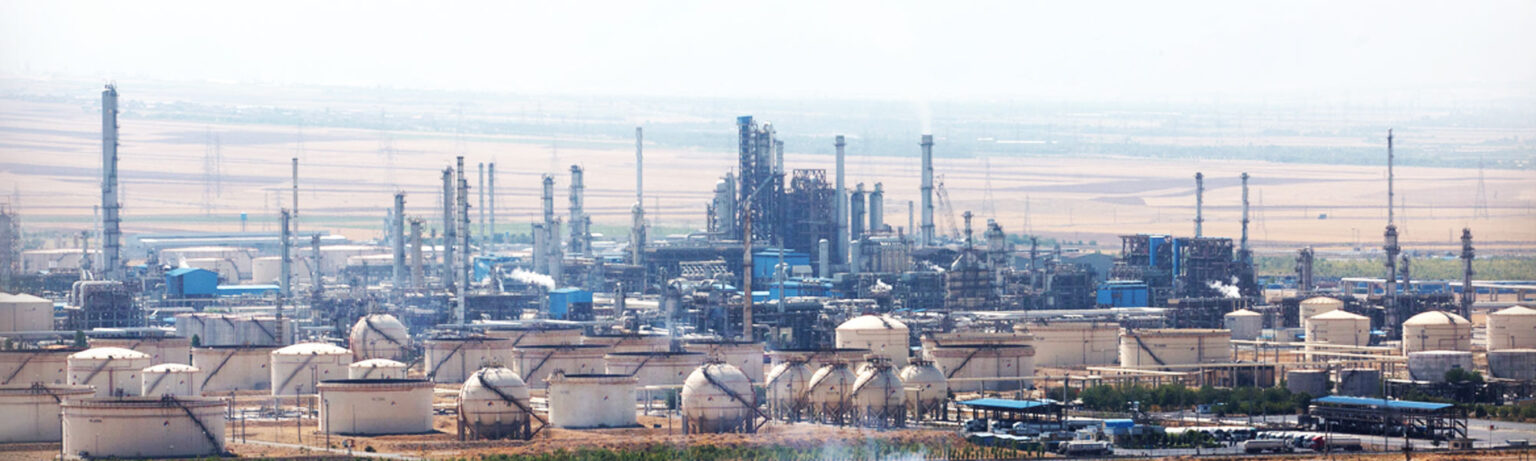
Inauguration and Groundbreaking of Five Major Projects at Shazand Petrochemical
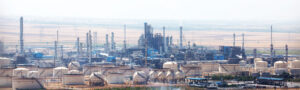
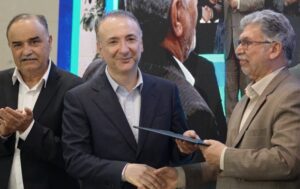
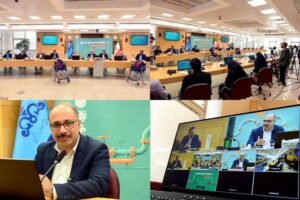
With the presence of the representative of the Supreme Leader in Markazi Province and a group of city officials, five production, environmental, and development projects were inaugurated and groundbreaking was done at Shazand Petrochemical complex.
At the inauguration ceremony of these projects, Mr. Alikhani, Deputy of Economic Affairs of Markazi Province, Baghbani, a board member and production control manager, and Motaghi, manager of downstream industry development at the National Iranian Petrochemical Company, were also present.
Increasing Production Capacity and Product Chain at Shazand Petrochemical
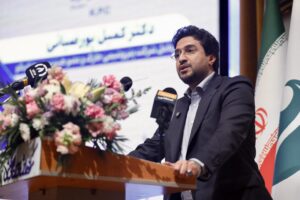
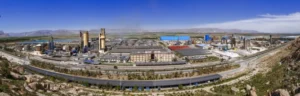
Abbas Karimi, CEO and board member of Shazand Petrochemical, referred to the importance and position of this company among the country’s petrochemical complexes and said: The Shazand Petrochemical Complex, as the producer of the most diverse polymer and chemical products in the country, has an annual production capacity of 1,650,000 tons of product. This complex, with 17 production units, produces some of its products uniquely in the country. The inauguration of these projects, by increasing production capacity and product chain, preventing material waste, as well as saving and reducing energy consumption, has a direct impact.
He criticized the 70% increase in fuel prices and stated: The country’s petrochemical industry faces challenges, including sudden decisions and abrupt price increases. Recently, fuel prices have increased by 70%, which directly affects production costs.
Karimi continued: Our estimate is that with this increase, 130 billion rials of the company’s profit will be reduced monthly, while last year our total fuel cost was 1.8 trillion rials; this year, with the new decision, it will reach 6 trillion rials.
The CEO of Shazand Petrochemical, referring to the fact that the feedstock of this company is liquid and the most expensive feedstock in the country’s petrochemical industry, emphasized: Unfortunately, our final product is sold at the same price as competitors’ products, which use gas feedstock, and this reduces the profit margin, which, under new regulations, is approaching zero. If companies incur losses, the country’s budget funding sources will also be affected.
The main objectives in implementing the mentioned projects are as follows:
- 1. Design, construction, and installation of the Ethoxylates unit reactor with the aim of:
– Diversifying product production.
– Increasing production by 25%, from 40,000 tons per day to 50,000 tons per day.
-The Ethoxylates unit is capable of producing 30 grades.
- 2. Design, construction, and installation of a new spherical tank for the ethylene oxide unit with the aim of:
– Increasing the storage of the strategic and unique ethylene oxide product (required by the country’s detergent industries) by 75 tons, from 150 tons to 225 tons.
– Increasing product storage capacity by 50%.
– Creating the necessary infrastructure to increase capacity in the ethylene oxide chain.
- 3. Groundbreaking of the migrant wastewater transfer project to the Shazand Petrochemical Complex with the goal of:
– Reducing groundwater extraction by 25%.
Currently, the complex’s annual water consumption is over 6 million cubic meters, supplied from 8 wells in the area. With the implementation of this project, 1.6 million cubic meters of received wastewater will be recycled annually.
- 4. Inauguration of the hydrogen transfer line project from Imam Khomeini refinery in Shazand to the Shazand Petrochemical Complex with the goal of:
– Preventing shutdown of hydrogen-consuming units during the shutdown of the olefin unit.
– Utilizing the received hydrogen for implementing new development projects.
It is worth mentioning that the hydrogen produced at the Shazand Petrochemical Complex is grade 5 with a purity of 99.999%, used in polymer units as well as in the diethyl hexanol unit.
- 5. Groundbreaking of the surplus fuel gas recovery project from the olefin unit with the goal of:
– Reducing gas intake from the national network by saving 5 million cubic meters annually.
– Shutting down the complex’s flares.
The daily gas consumption of the Shazand Petrochemical Complex is one million cubic meters.