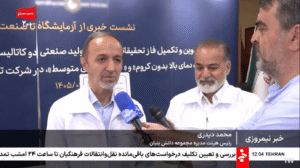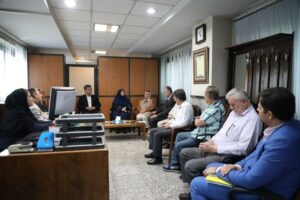
The annual general assembly of Shiraz Petrochemical Company was held with the presence of 88 percent of shareholders, and at the end, the company’s financial statements were approved. Based on the resolution of the meeting, a cash dividend of 6,928 rials per share, equivalent to about 80 percent of distributable profit, was distributed among shareholders.
It is noteworthy that 2025-2026 year’s assembly of Shiraz Petrochemical was held under circumstances where the board’s report and the CEO’s statements depicted a year full of challenges, but with relatively maintained operational capacity, growth in export rates, increased cost of goods sold, damage caused by war, and continued pursuit of significant claims from the government.
2 percent production growth
One of the most important topics raised at the meeting was the issue of gas restrictions in the second half of the year. According to company managers, Shiraz Petrochemical usually faces reduced production capacity in the second half of the year due to gas consumption management policies—a matter that has become one of the main risks for the country’s urea industry in recent years.
Despite these restrictions and incidents such as the explosions at Shahid Rajaee Port, the 12-day war, and the Ramadhan war, the company has managed to maintain its production performance and even increase production by 2 percent.
This limited but positive growth was achieved under conditions where the company faced a set of external pressures, including gas outages, disruptions in international logistics, and increased production costs. From an analytical perspective, maintaining the production trend under such circumstances shows that the company’s operational management has been able to control part of the environmental pressures, although the impact of these restrictions on profitability has been significant.
Loss of 390,000 Tons of Production
According to the report presented at the assembly, last year’s tensions and gas outages caused about 390,000 tons of product to be removed from the company’s production cycle. This figure is highly significant operationally, as it shows that a considerable portion of the company’s potential capacity was lost due to factors beyond its control.
Company managers stated that, based on calculations, if these challenges had not occurred, Shiraz Petrochemical’s earnings per share could have reached about 12,520 rials. This indicates that energy constraints and unforeseen events have had a direct and significant impact on the company’s profitability.
In other words, the gap between realized profit and potential profit is more due to production limitations, increased costs, and non-operational factors than to weaknesses in the sales market or a drop in demand.
Export Rate Growth
One of the positive points raised at the assembly was the improvement in the company’s export product rates. According to management, the average export sales rate for products in last fiscal year was in the range of $375 to $380. It was also noted that the export rate increased from about $308 to $370 per ton.
This growth in export rates can be an important supportive factor for the company’s operating income, especially at a time when urea producers are facing increased production costs, higher feedstock and fuel prices, and energy constraints.
However, it should be noted that the increase in export sales rates can only fully impact profitability if the company is able to utilize its production capacity optimally. Therefore, continued gas restrictions or the shutdown of some units could offset part of the positive effect of higher export rates.
Jump in Cost Price
Last year was assessed as a challenging year for Shiraz Petrochemical in terms of production costs. According to the information presented at the assembly, the company’s fuel rate increased by 88% and the feedstock rate by 56%.
These increases have put significant pressure on the company’s profit margin. In the urea industry, feedstock and fuel rates are among the most important factors determining the cost price, and any increase in these items directly affects the company’s gross profit.
Accordingly, although the increase in export rates has compensated for part of the cost pressure, the simultaneous jump in feedstock and fuel rates has caused the company’s profit margin to remain under pressure. For this reason, energy pricing policies in the coming years will be one of the most important variables affecting the profitability of Shiraz Petrochemical.
International Transportation Crisis and Increase in Logistics Costs
Shiraz Petrochemical managers emphasized at the assembly that the occurrence of war and regional tensions has created widespread crises in the field of international transportation and has led to increased logistics costs.
This issue is highly significant for companies like Shiraz Petrochemical, which conduct part of their sales through exports. Increased transportation costs, disruptions in export routes, insurance risks, and delays in cargo delivery can negatively impact net export income.
In fact, even if the global or export price of urea is at appropriate levels, increased transportation costs and commercial risks can reduce part of the price advantage.
War Damage to Zone 2 complex
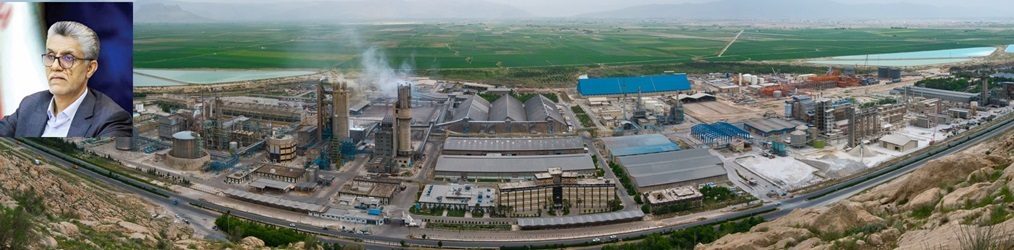
One of the most important parts of the assembly was the CEO’s explanation about the damage inflicted on the complex as a result of the war. According to the Babk Pourkia, on April 5th, two missiles struck the company’s Zone 2 complex, resulting in damage to the nitric acid unit. For this reason, the company’s nitrate production has been halted.
Additionally, shrapnel hit the offsite section, utilities, and some company equipment. However, the CEO announced that in less than two weeks, the ammonia and urea units were brought back into production, and currently, production in Zone 2 is operating at full capacity.
The company’s initial estimate of the damage is about $20 million. However, the exact amount of the loss will be officially disclosed after the completion of assessments.
Return of the Damaged Unit in the Coming Year
According to the explanations provided at the assembly, in the first half of this year, the nitric acid and nitrate units will not be in production. However, the company has announced that the damaged unit will return to production in less than a year.
The positive point here is that the equipment requiring purchase from abroad has not been damaged, and contracts for the supply and construction of the damaged equipment have been signed with domestic companies. This can somewhat facilitate the reconstruction process in terms of time, cost, and sanctions-related risks.
From an analytical perspective, the halt in nitrate production in the first half of the year may affect the company’s revenue mix, but the full return of the ammonia and urea units to production has prevented the negative impact of this incident from spreading to the company’s overall operations.
Demands of 15 to 16 trillion tomans from the Government
Another important focus of the assembly was the company’s receivables from the Agricultural Support Services Company and its affiliated unions. According to the managers, the receivables for the year 1404 have been audited and registered, but the receivables related to the years 1397 and 1398 have not yet been audited, and the company is pursuing the registration of these receivables as soon as possible.
On the other hand, based on the statements made, the total receivables of Shiraz Petrochemical from the government and related institutions are estimated to be about 15 to 16 trillion tomans, and negotiations with the Ministry of Agriculture to collect these receivables are ongoing.
This amount is very important for the company in terms of liquidity. Collecting part of these receivables can strengthen the company’s financial resources, reduce working capital pressure, and even increase the company’s capacity to implement maintenance, reconstruction, and development projects.
Settlement of Part of the Receivables through Receiving “Fars” Shares
Emphasizing the board of directors’ reports, it was announced during the Shiraz Petrochemical assembly that part of last year’s receivables was settled by receiving shares of Persian Gulf Petrochemical Industries Company, i.e., “Fars”.
This method of settlement can be examined from two perspectives. On the one hand, receiving shares instead of cash may not fully meet the company’s short-term liquidity needs. On the other hand, if the received shares are sufficiently liquid and properly valued, they can turn part of the outstanding receivables into tradable assets.
However, for a more precise assessment of the impact of this issue on the financial statements, the details of the value of the received shares, the timing of the transfer, the accounting recognition method, and the company’s policy on holding or selling these shares must be clarified.
Positive Signal for Profitability
Another important point raised at the assembly was the reinstatement of the tax exemption for urea exports; an issue that can have a positive effect on the profitability of the country’s urea producers, including Shiraz Petrochemical.
In recent years, tax ambiguities and the removal or limitation of certain exemptions have been one of the main challenges for export-oriented companies. The return of the tax exemption for urea exports can reduce part of the cost pressure on companies and lead to an improvement in net profit.
For Shiraz Petrochemical, this issue, along with the growth in export prices, can play an important supportive role in next year’s performance—especially if the company can achieve its planned urea production capacity.
Urea Production Plan for 2026-2027
It was announced at the assembly that the urea production plan for 1405 has been developed based on the assumption of achieving 86 percent capacity in the second half of the year. This assumption reflects the consideration of potential gas limitations in the company’s production planning.
In other words, the company has taken a more conservative approach by factoring in the possibility of reduced capacity in the second half of the year in its production plan. This type of planning can result in more realistic operational budgeting and profitability forecasts.
However, if gas limitations are less than anticipated, there will be the possibility of higher production and improved profitability. Conversely, intensified energy restrictions could cause actual performance to diverge from the plan.
80% Dividend Distribution of profit
At the end of the assembly, the company’s financial statements were approved, and shareholders agreed to a cash dividend of 6,928 rials per share. This amount is approximately 80% of the company’s declared profit.
Additionally, Shiraz Petrochemical’s dividend policy indicates that, despite the need for financial resources to rebuild the damaged unit, manage liquidity, and pursue receivables, the company has still adopted a relatively attractive approach for income-oriented shareholders.
However, from an analytical perspective, the continuation of this level of dividend distribution in the coming years will depend on several key factors, including the status of receivables collection, feedstock and fuel rates, gas restrictions, the export price of urea, and the speed of returning damaged units to production.
A Risky Year Accompanied by Profit Reliance
The annual assembly of Shiraz Petrochemical showed that the company has been in one of its most challenging operational periods. Gas restrictions, a sharp increase in feedstock and fuel rates, logistical crises, the halt in nitrate production, and damages caused by war have exerted significant pressure on the company’s performance.
However, several positive factors are also notable in the company’s general meeting and performance:
– 2%production growth despite limitations;
– Increase in export prices from $308 to about $370 per ton;
– Reinstatement of tax exemption for urea exports;
– Continued full-capacity production of ammonia and urea in Region 2 after the incident;
– Plan to restore the damaged unit in less than a year;
– Pursuing the collection of 15 to 16 trillion tomans in receivables from the government;
– Significant cash dividend distribution to shareholders
In conclusion, it can be stated: The outlook for Shiraz Petrochemical in the coming period is highly dependent on three variables: the status of gas supply, the trend of global and export prices of urea, and the resolution of government receivables. If these variables improve, the company’s profit growth potential will be significant; however, continued energy constraints and rising production costs may remain the most important operational and financial risks for the company.